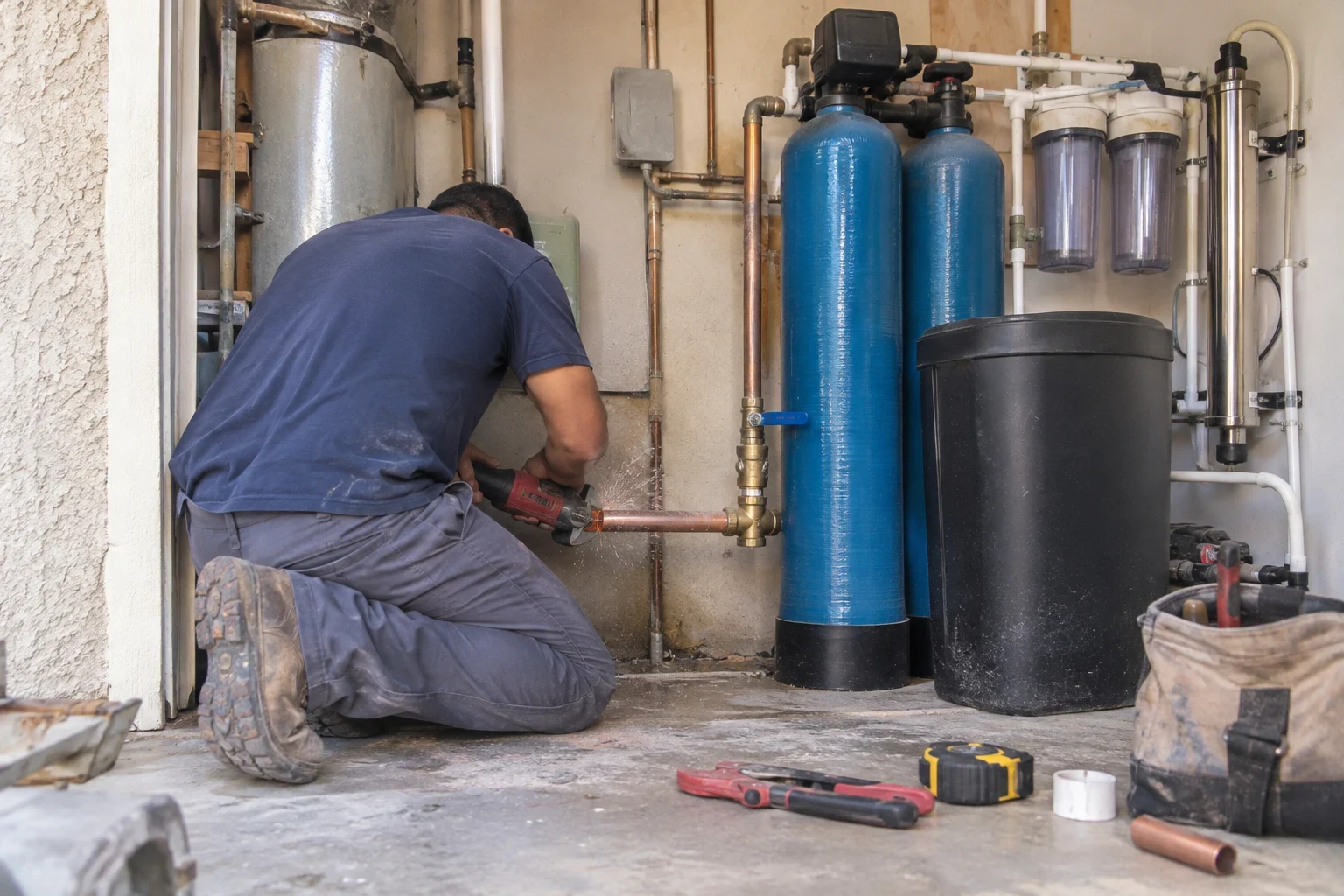
Water Filtration Installed in Rancho Palos Verdes Homes
We install reverse osmosis under the kitchen sink, dual tank and whole home systems at the main line, and filtration set up for city or well water. Each system is sized to your home's flow, uses catalytic carbon where chloramine is the problem, and comes with a written filter-change schedule. We work across Rancho Palos Verdes, Lomita and Rolling Hills Estates.
- Line-item written quotes
- Sized to your home's flow
- Catalytic carbon for chloramine
- Written filter-change schedules
Filtration Systems We Install
Reverse osmosis is a point-of-use system: it sits under the sink, pushes water through a thin-film composite membrane that rejects most dissolved solids, and stores the result in a small pressurized tank. Whole home water filtration and dual tank water filtration go in where the supply enters the house, so the shower, the washing machine and every tap draw from filtered water. City water filtration relies on catalytic carbon, which breaks down chloramine far better than ordinary carbon, while well water filtration is built around what a private well actually delivers. Each service page explains the parts, the upkeep and where the system goes in your home.
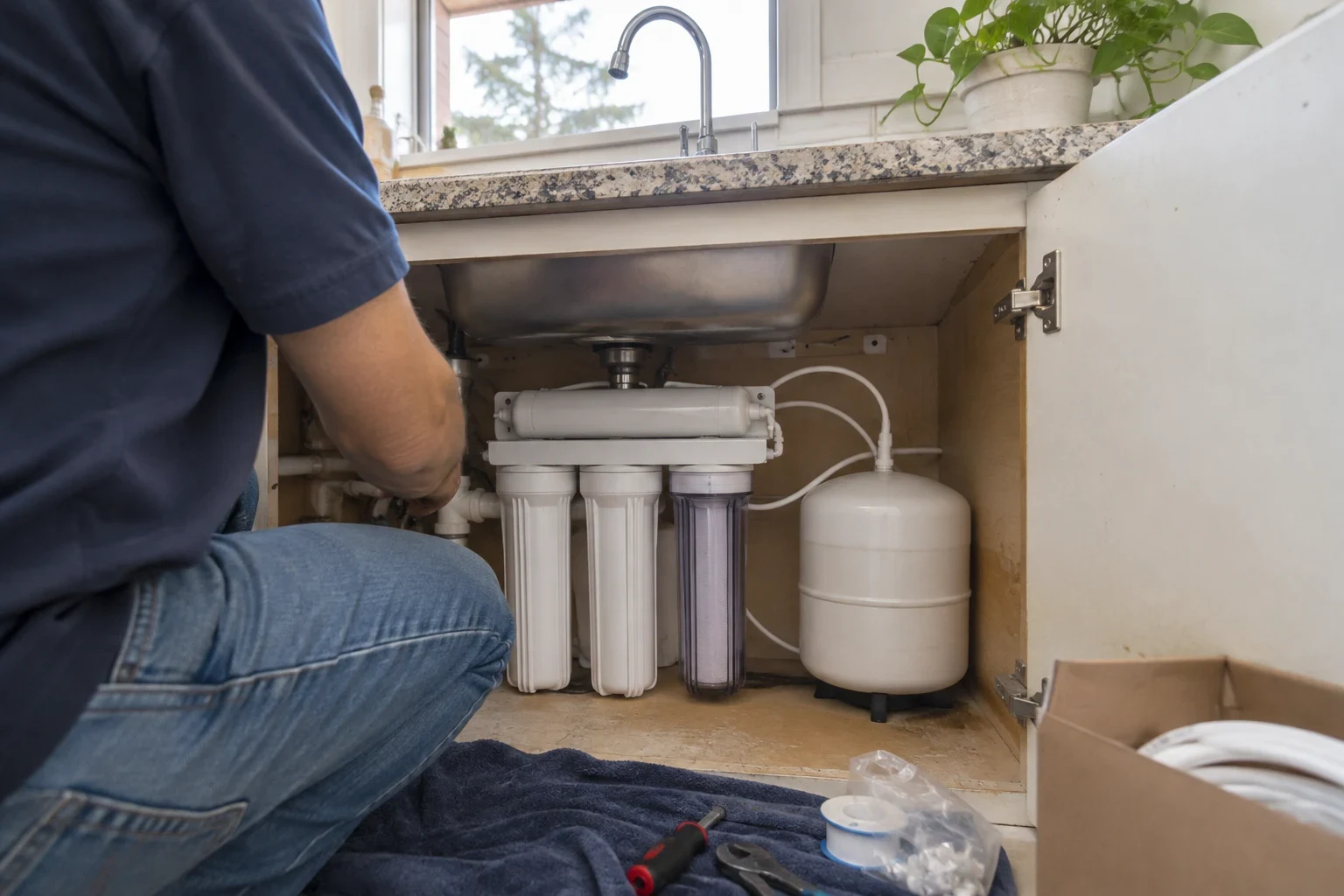
Reverse Osmosis
An under-sink membrane system that gives you cleaner water for drinking, coffee and cooking from its own faucet, with prefilters that protect the membrane.
Dual Tank Water Filtration
Two media tanks plumbed in series at your main line, so each carbon bed gets enough contact time to cut chloramine taste and odor at every tap.
City Water Filtration
A carbon-based system built for treated municipal water, so chloramine taste and odor drop out at every tap and the media lasts as long as it should.
Well Water Filtration
Sediment, iron and sulfur filtration installed after your pressure tank, sized to your pump's flow so the water clears up without losing pressure.
Whole Home Water Filtration
A sediment prefilter and carbon tank on your main line take disinfectant taste and grit out of every faucet and shower in your home.
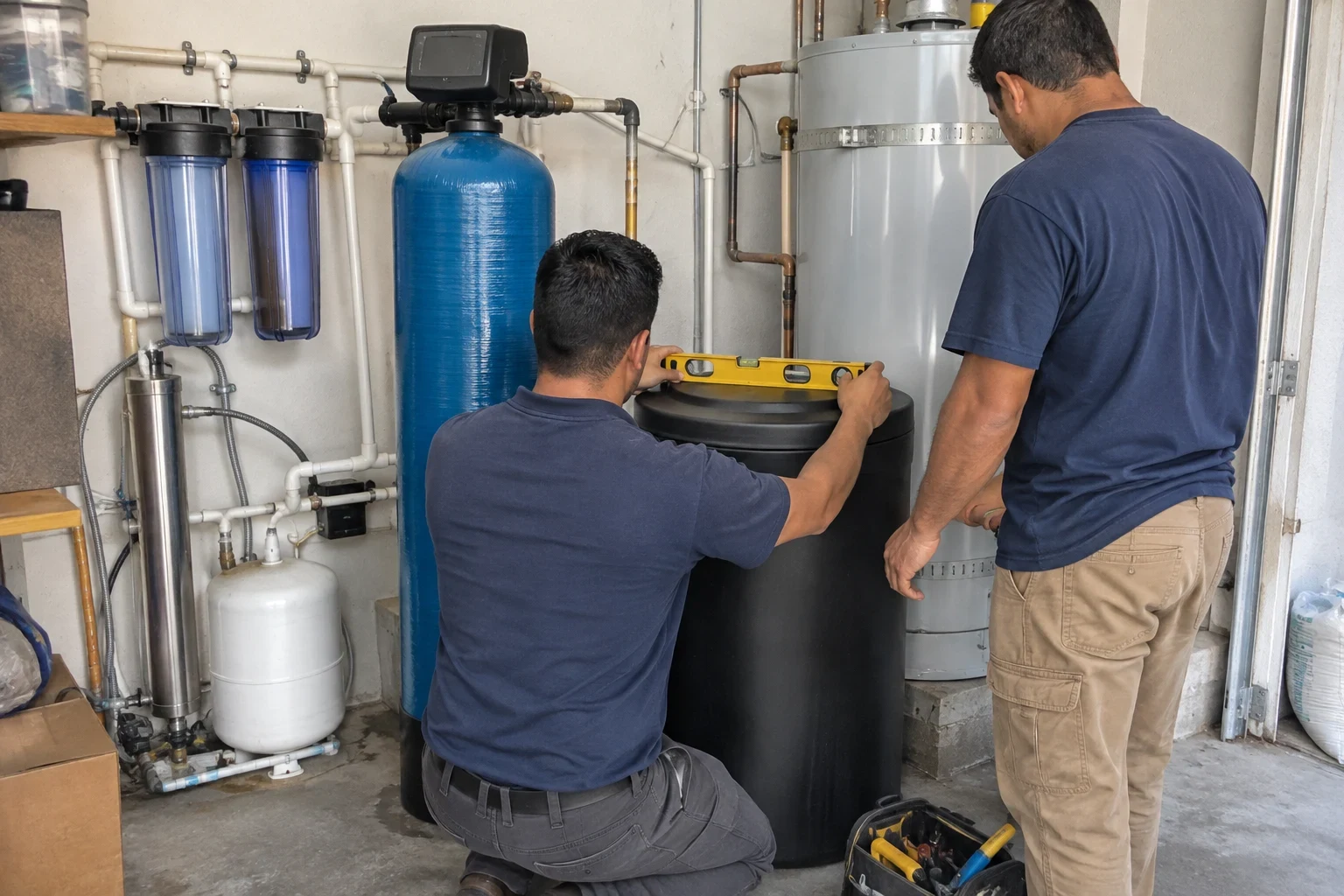
A Filtration Company That Explains the Details
We install water filtration inside homes on the peninsula and in the South Bay. Our work is five kinds of systems: reverse osmosis, dual tank water filtration, city water filtration, well water filtration and whole home water filtration. We explain how each one works, what wears out and why, so you can pick the one that fits your water and your plumbing.
Carbon needs enough contact time to work on chloramine, and a membrane needs steady pressure to make its rated output. That is why we size every system to your peak flow, check your pressure and pipe material, and write down the replacement parts and their intervals before you decide. If an old unit has leaked, we photograph it before we take anything apart.
Where We Install Systems
Our installs cover Rancho Palos Verdes along with neighboring Palos Verdes Estates, Rolling Hills Estates and Lomita. We also put systems into homes in Torrance, Redondo Beach, Hermosa Beach, Carson and West Carson, and we travel as far as Compton and Hawthorne.
- Rancho Palos Verdes
- Lomita
- Palos Verdes Estates
- Rolling Hills Estates
- Torrance
- Carson
- Redondo Beach
- West Carson
- Hermosa Beach
- Compton
- Hawthorne
Live near the edge of one of these towns? Give us your cross streets on the phone and we can confirm right away if your home is in our range.
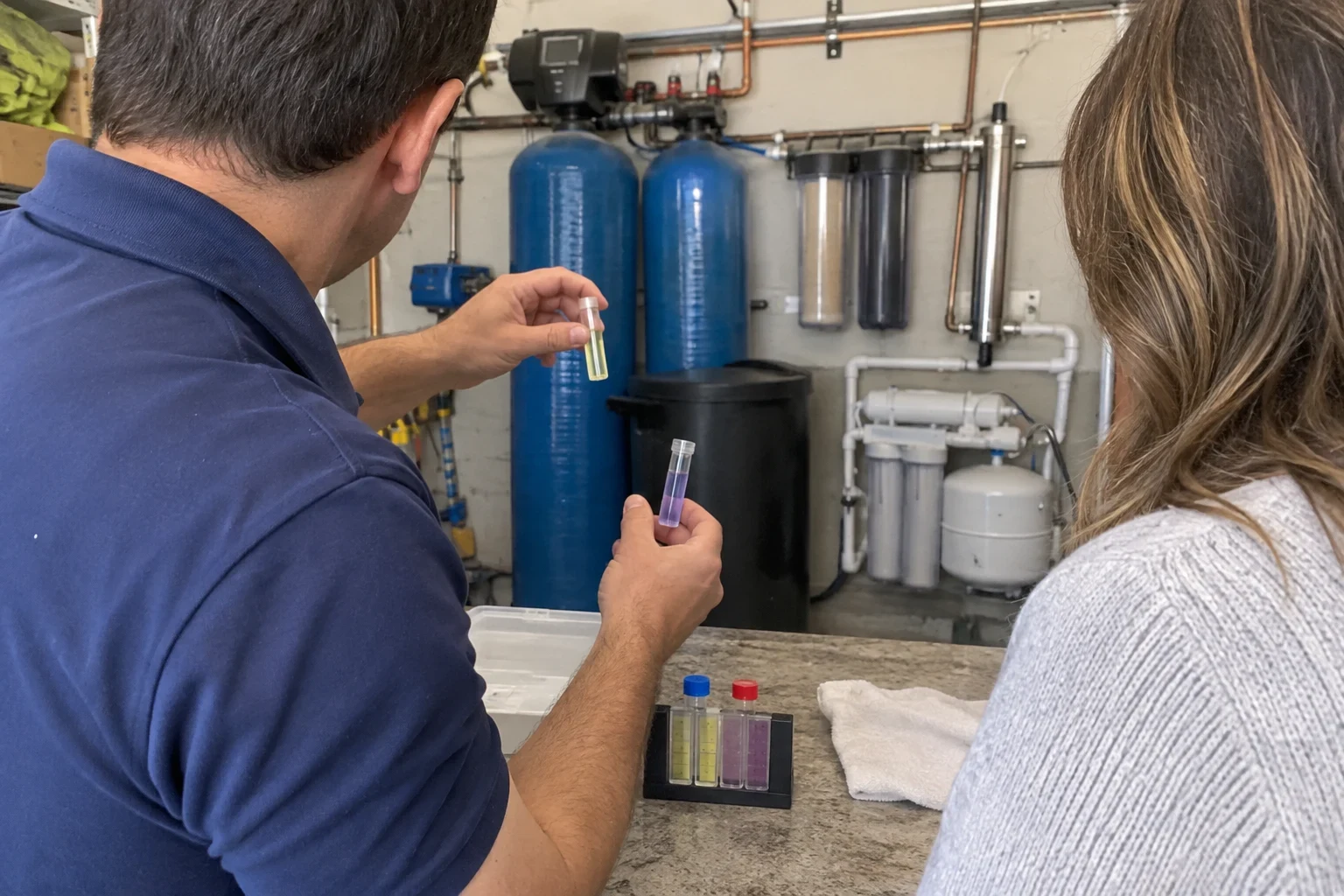
How We Work in Your Home
Most of our calls start with a taste or odor complaint. A fair number start with a wet cabinet floor under an old filter. We handle both the same way: look carefully, write it down, then explain your options.
- Systems sized to your flow
- We count bathrooms and fixtures, check incoming pressure and look at your main line before recommending a tank or housing size. An undersized system lets water pass through too fast, so the taste returns early and pressure sags when two showers run.
- Quotes that name every part
- Your quote lists the system, tank or housing size, the media, the bypass valve, the shutoff and the fittings. You can see what each line does and compare it fairly against anything else you are considering.
- Connections chosen to stop the next leak
- Many under-sink leaks begin at a plastic nut cracked from overtightening or a rubber supply hose that has aged out. We use braided stainless supply lines, put a dedicated shutoff ahead of each system, and pressure-check every joint before we pack up.
- Your home left as we found it
- Towels and a tray go under the sink before the first fitting comes loose, and drop cloths cover the floor at the main line. Drilling dust gets vacuumed, and old equipment leaves with us unless you want it kept for your claim.
From First Call to Final Check
A typical install fits within a few hours of one day. This is the sequence we follow.
- 1
Talk it over by phone
Tell us about the taste, odor or spotting you notice, or the wet cabinet floor you found, and describe the equipment you have now. Based on that, we suggest a system and give you your quote by phone.
- 2
Measure before removing
Before anything comes out, we measure incoming pressure, confirm your pipe material and photograph the existing unit and its fittings. If there has been a leak, we keep the failed part for you.
- 3
Install and flush
With the water shut off, we fit a bypass valve and shutoff, mount the tanks or the RO manifold, and route the drain line through an air gap. Fresh carbon is flushed until the fines run clear, and an RO storage tank is filled and purged before anyone drinks from it.
- 4
Pressure check and walk-through
Once the water is back on, every joint is checked at full pressure and checked again a few minutes later. We then show you the bypass, the shutoff and the filter change schedule, clean up the work area and give you your photos.
Questions We Hear Most
- Do I need reverse osmosis or a whole home system?
- Reverse osmosis treats water at one tap, usually the kitchen, and removes far more dissolved solids than carbon alone. A whole home system treats every tap and shower but uses media rather than a membrane. Many people want better drinking water and less chlorine smell in the shower, and some pair the two. We explain the tradeoffs on the phone before you decide.
- My old filter leaked under the sink. Will insurance pay for the damage?
- That depends on your policy and on how your insurer views the leak. Many policies treat a sudden failure differently from slow seepage over time, and only your insurer can decide coverage. What we can do is photograph the failed part and the damage, keep the part for the adjuster, and write down what we found.
- Is installation really free?
- Yes. Our offer is free install (we cover the cost). Your bill covers the equipment plus any connection parts needed to hook it up safely, a new shutoff valve for example. Every one of those items appears as its own line on your quote.
- What happens to my old filter or RO unit?
- We disconnect it, cap or reuse the supply connection as needed, and haul the old equipment away. If you want the old part kept, we leave it with you.
- Will a filter take out the chlorine taste and smell?
- Many Southern California utilities disinfect with chloramine, which standard carbon removes slowly. Catalytic carbon is made to break it down, which is why we use it in city water filtration. Reverse osmosis prefilters also strip it out before water reaches the membrane, which protects the membrane too.
- How long do the replaceable parts last?
- On an RO unit, the sediment and carbon cartridges ahead of the membrane are usually changed about once a year. The membrane lasts longer, depending on how much water you draw and what arrives from the street. Whole home carbon media is measured in years. You get the schedule for your system in writing.
- Will a whole home system lower my water pressure?
- An undersized tank will. We size the vessels to your home's peak flow and use full-port valves at the connection, so pressure at the shower should feel the same as before.
What Shapes the Price of Your System
Our offer is free install (we cover the cost), so labor is not part of your number. The equipment itself and the connection parts it needs to run safely make up the quote. Five things move that figure more than anything else.
Once we know what you want treated and where the system would go, we give you a quote by phone and then put it in writing line by line. If install day uncovers something new, such as a shutoff that will not seal, we show it to you and explain the change before any added work starts.
- System type and capacity
- A single under-sink reverse osmosis unit is a smaller investment than two whole home media tanks. Tank size follows your peak flow in gallons per minute, so a dishwasher and two showers can run at once without the pressure sagging. Bigger homes call for bigger vessels.
- Where your main line runs
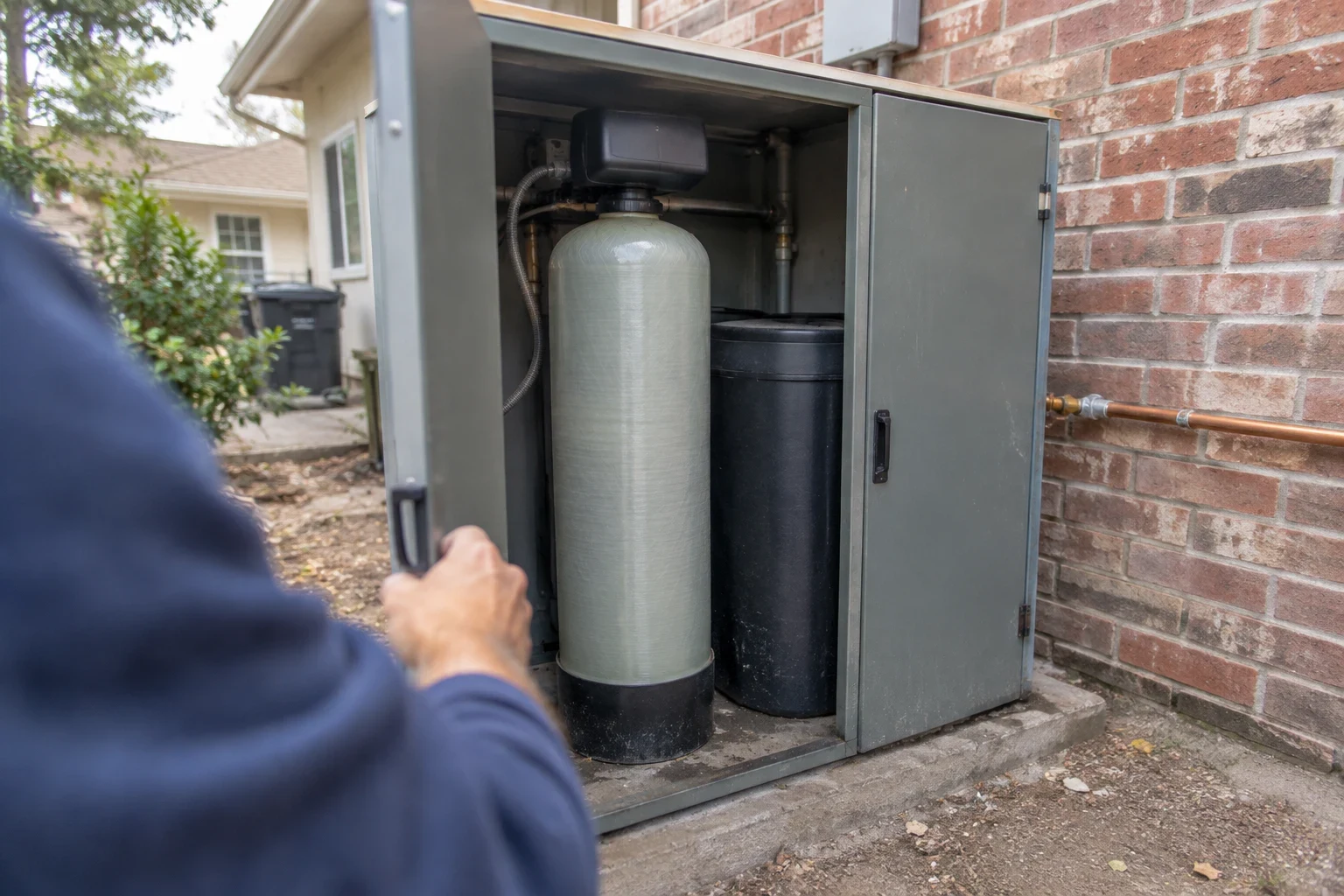
- The easiest hookup is a main line on a garage wall. On hillside lots the line often travels along an exterior wall instead, which adds pipe, a solid mounting pad and a cover to shield the tanks from sun and salt air.
- The plumbing you already have
- A gate valve that no longer closes all the way, or a rusted galvanized nipple at the connection point, gets replaced before the new system goes on, since a sound system cannot hang from a failing part. We photograph that part so the line item on your quote has a clear reason behind it.
- Drain access
- A dual tank system sends backwash water to a drain, and reverse osmosis routes its reject water to a drain saddle under the sink. Each needs a code-correct air gap, and a longer run to the closest standpipe means more material.
- Filters and membranes over time
- Sediment and carbon prefilters, carbon media and RO membranes each wear out on a different schedule. We write down the replacement parts and their usual intervals so the yearly upkeep is known before you pick a system.
Start With a Conversation About Your System
Tell us what your water tastes like, what is under your sink now and whether anything has leaked. We will explain your options and give you a line-item quote.